





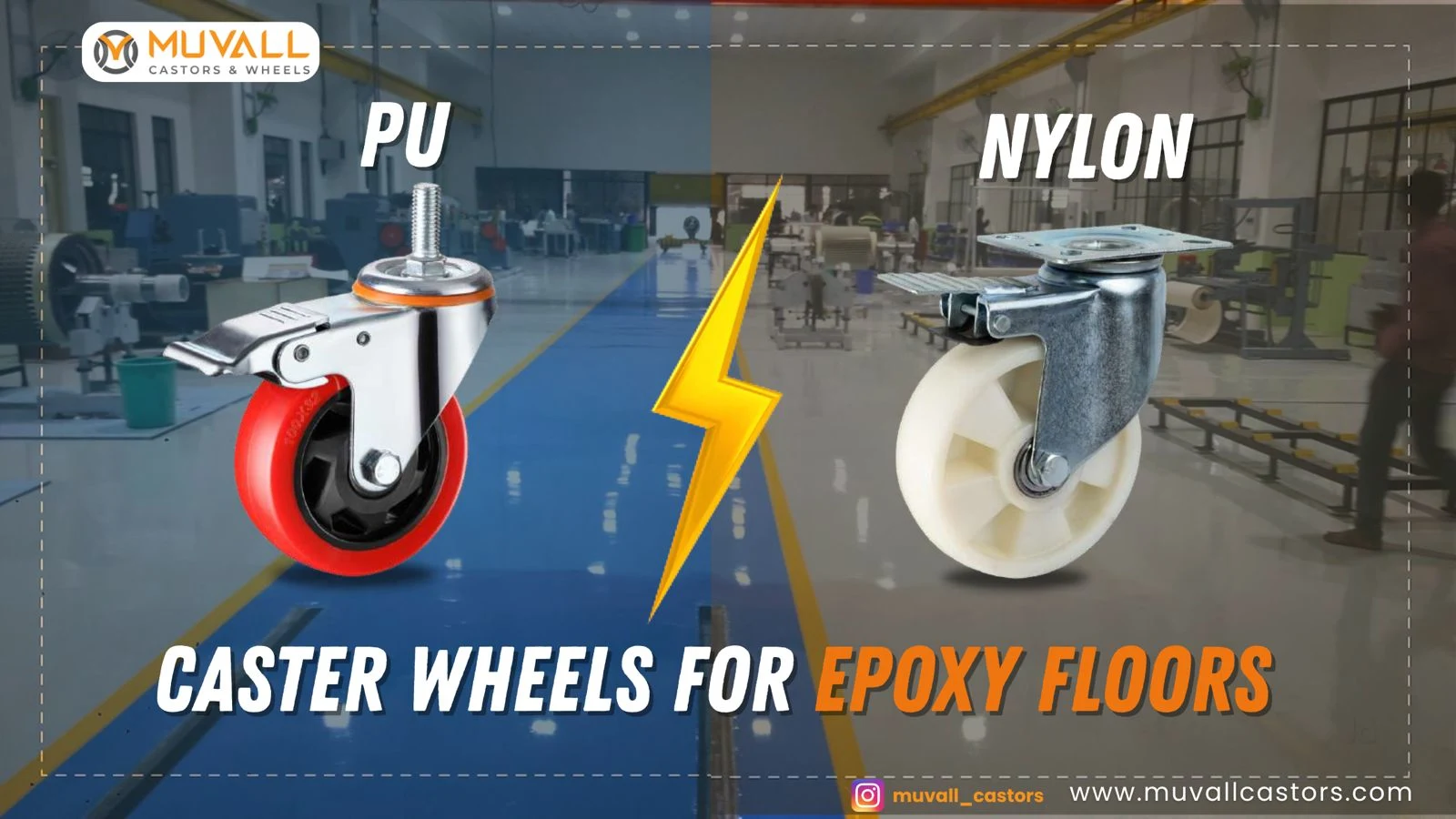
PU vs Nylon Caster Wheels for Epoxy Floors: Which Is Better?
When selecting caster wheels for epoxy flooring, choosing the right material is critical. Epoxy floors are smooth, durable, and commonly used in warehouses, hospitals, and manufacturing facilities, but they are also prone to scratches, marks, and wear if incompatible wheels are used.
Two of the most common options are Polyurethane (PU) and Nylon caster wheels. In this blog, we’ll compare both in detail to help you choose the best solution.
1. Understanding Epoxy Floor Requirements
Epoxy floors require caster wheels that offer:
- Non-marking performance
- Low rolling resistance
- Floor protection
- Noise reduction
According to Muvall guidelines, wheel material must be selected based on floor type, load, and operating conditions .
2. Polyurethane (PU) Caster Wheels
Polyurethane wheels are widely used across industries due to their versatility and floor-friendly properties.
Key Features:
- Soft tread (92–95 Shore A hardness)
- Non-marking and non-staining
- High load capacity (up to 300 kg+ per wheel depending on design)
- Excellent wear resistance
Advantages on Epoxy Floors:
- Protects flooring from scratches and dents
- Smooth and quiet movement
- Reduced vibration and noise
- Better grip and control
Ideal Applications:
- Hospitals and cleanrooms
- Warehouses with epoxy flooring
- Retail and indoor environments
3. Nylon Caster Wheels
Nylon wheels are known for their high strength and durability, but they behave differently on epoxy surfaces.
Key Features:
- Hard tread (typically ~95 Shore D)
- High load capacity (up to 1000 kg in heavy-duty variants)
- Resistant to chemicals and moisture
Advantages:
- Excellent for heavy loads
- Low rolling resistance on smooth surfaces
- Long lifespan in harsh environments
Limitations on Epoxy Floors:
- Can scratch or damage epoxy coating
- Noisy during operation
- Lower grip compared to PU
4. Key Differences: PU vs Nylon
Feature | Polyurethane (PU) | Nylon |
| Floor Protection | Excellent (non-marking) | Poor (may damage epoxy) |
| Noise Level | Low | High |
| Load Capacity | Medium to High | High |
| Grip | High | Low |
| Durability | High | Very High |
| Floor Compatibility | Ideal for epoxy | Better for rough/industrial floors |
5. Performance Factors That Matter
A. Floor Protection
PU wheels are specifically designed for floor-sensitive environments, whereas nylon wheels are harder and may cause long-term surface wear.
B. Ergonomics
The catalog highlights that tread material and hardness directly impact push-pull force and efficiency .
- PU → Lower operator fatigue
- Nylon → Higher effort due to rigidity
C. Load Distribution
- Nylon handles extreme loads better
- PU provides a balance between load capacity and floor safety
6. When Should You Choose PU Wheels?
Choose Polyurethane caster wheels if:
✔ You have epoxy or polished floors
✔ Floor protection is a priority
✔ You need quiet operation
✔ Load requirements are within medium to heavy range
7. When Should You Choose Nylon Wheels?
Choose Nylon caster wheels if:
✔ You are handling very heavy loads (extreme industrial use)
✔ Floor damage is not a concern
✔ Environment includes chemicals, water, or debris
✔ You need maximum durability
8. Recommended Configuration for Epoxy Floors
For best performance on epoxy flooring:
- Use PU wheels with swivel castors for maneuverability
- Add double brakes for safety and control
- Choose larger wheel diameters (100–200 mm) for smoother movement
This ensures:
- Reduced rolling resistance
- Better ergonomics
- Longer floor life
Final Recommendation
For epoxy floors, Polyurethane (PU) caster wheels are the clear winner.
✔ Non-marking
✔ Quiet operation
✔ Floor protection
✔ Sufficient load capacity for most applications
Nylon wheels should only be used in specialized heavy-duty environments where floor protection is not critical.
People Also Read : Polyurethane Vs Polypropylene Wheels: The Right Choice For Industrial Caster Wheels
Conclusion
Choosing between PU and Nylon caster wheels depends on your application priorities. While nylon offers unmatched strength, it falls short on epoxy floors due to its hardness and potential to cause damage.
Polyurethane wheels, on the other hand, strike the perfect balance between performance, durability, and floor safety, making them the preferred choice for modern industrial and commercial environments.